Land Market: Where Growth Is Happening and What’s Coming Next
By Bradyn Neises, SIOR & Rob Kurtenbach
Bender Commercial Real Estate | 29th Annual Market Outlook Series | 8-minute read
The Sioux Falls metro land market posted its second-best year on record for unimproved land transactions in 2025. But the headline number tells only part of the story. The more meaningful trend is geographic: where development is happening is shifting in ways that reflect the maturing of a genuine multi-city metro — and the infrastructure decisions being made today will define where growth concentrates over the next decade.
This post is part of Bender Commercial’s 29th Annual Market Outlook series, based on presentations given February 19, 2026. For more context, watch the full presentation video or see the companion posts on the Sioux Falls retail, office, industrial, and multifamily markets.
Sioux Falls Unimproved Land Sales: Context for the Record
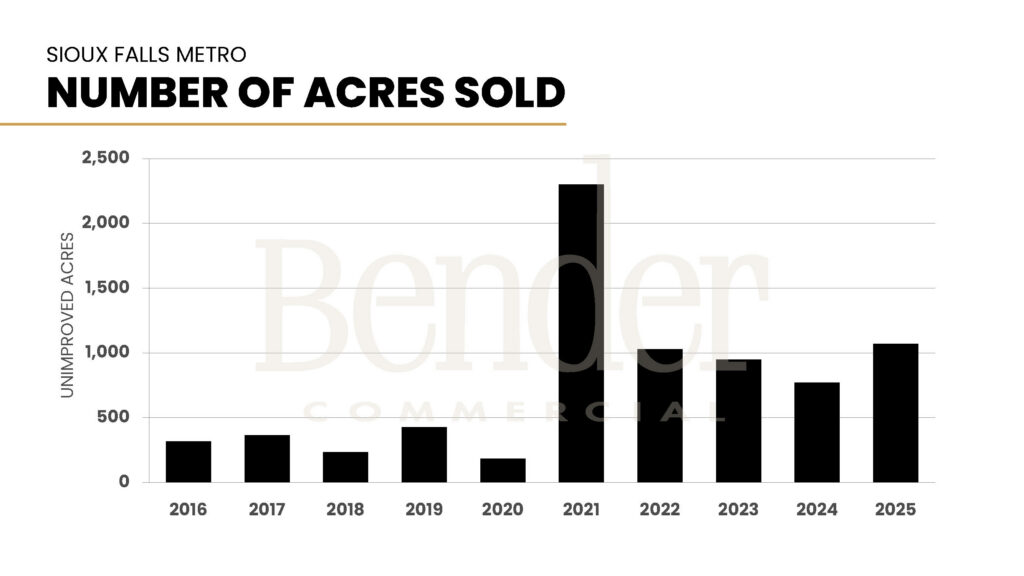
Unimproved land — raw, undeveloped ground purchased by developers and end users before infrastructure is installed — saw strong transaction volume in 2025 across the Sioux Falls, Brandon, Harrisburg, and Tea market area. Total acreage ranked second only to the extraordinary 2021 peak driven by post-pandemic stimulus and historically low interest rates.
Two significant end-user purchases influenced the 2025 total: the data center site on Sioux Falls’ east side and the acquisition of the state prison site. These are large, non-recurring transactions. When developer-only purchases are isolated — the more reliable indicator of organic development pipeline health — Sioux Falls’ share of metro acres sold drops to 49%, falling below 50% for the first time on record.
The Geographic Shift: Development Is Dispersing Across the Metro
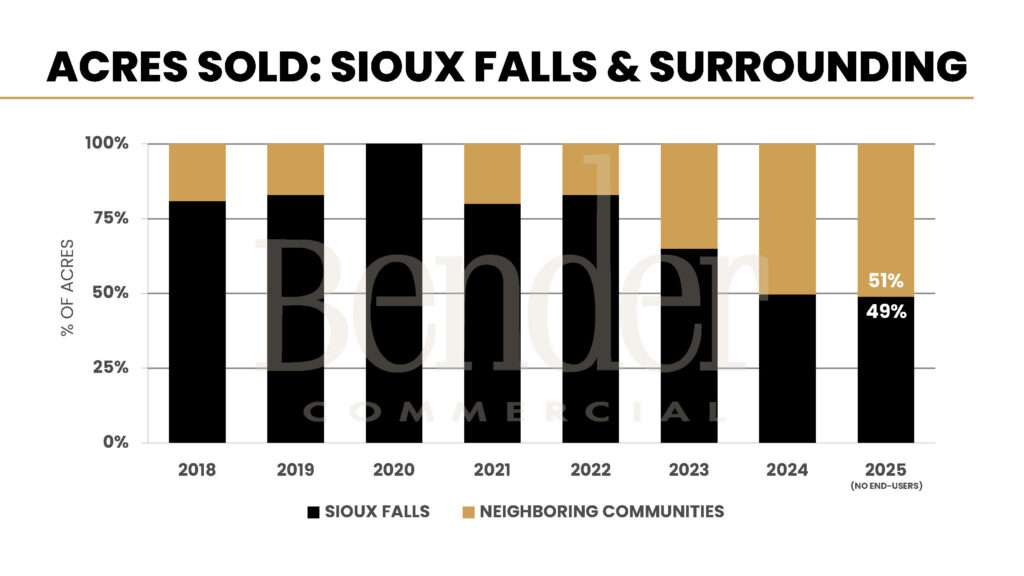
Through most of the past decade, Sioux Falls consistently captured 75–80% of metro land sales. That share has been declining steadily. The developer-adjusted 2025 data shows the city at near-parity with surrounding communities — and that shift signals healthy metro maturation, not decline.
Harrisburg, Tea, Brandon, and Hartford are growing because the fundamentals support their growth: infrastructure investment, available land, and population dispersing from the Sioux Falls core. National retailers and industrial users are making location decisions across the full metro footprint.
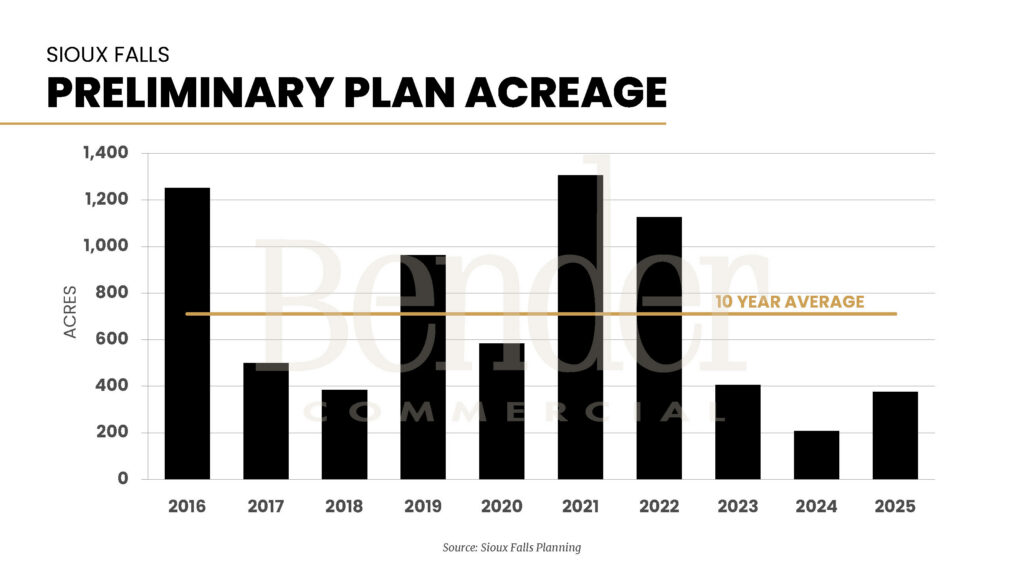
Sioux Falls preliminary plan acreage — the first step in the city’s development approval process — has been running below its 10-year average in recent years, while we are seeing activity in surrounding communities continue to increase. The pipeline is dispersing outward across the metro.
Infrastructure Is the Catalyst: Two Stories to Watch
The single most important driver of where land transactions happen in this market is infrastructure — specifically, whether sewer and water service has been extended to a given area. Two investments are shaping the next wave of development:
Harrisburg: 600 Acres Activated by a Single Infrastructure Investment
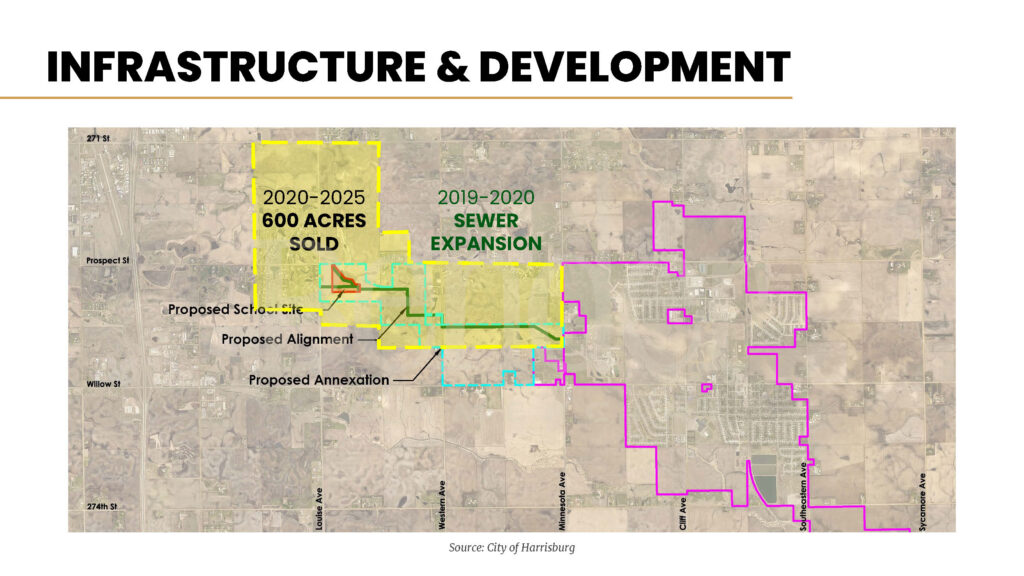
A sewer extension completed in Harrisburg in 2019–2020 serving the area around Baker Crossing Golf Course unlocked hundreds of acres for development. Since that extension, over 600 acres have been purchased in the corridor, with the majority of transactions occurring in the last 18 to 24 months.
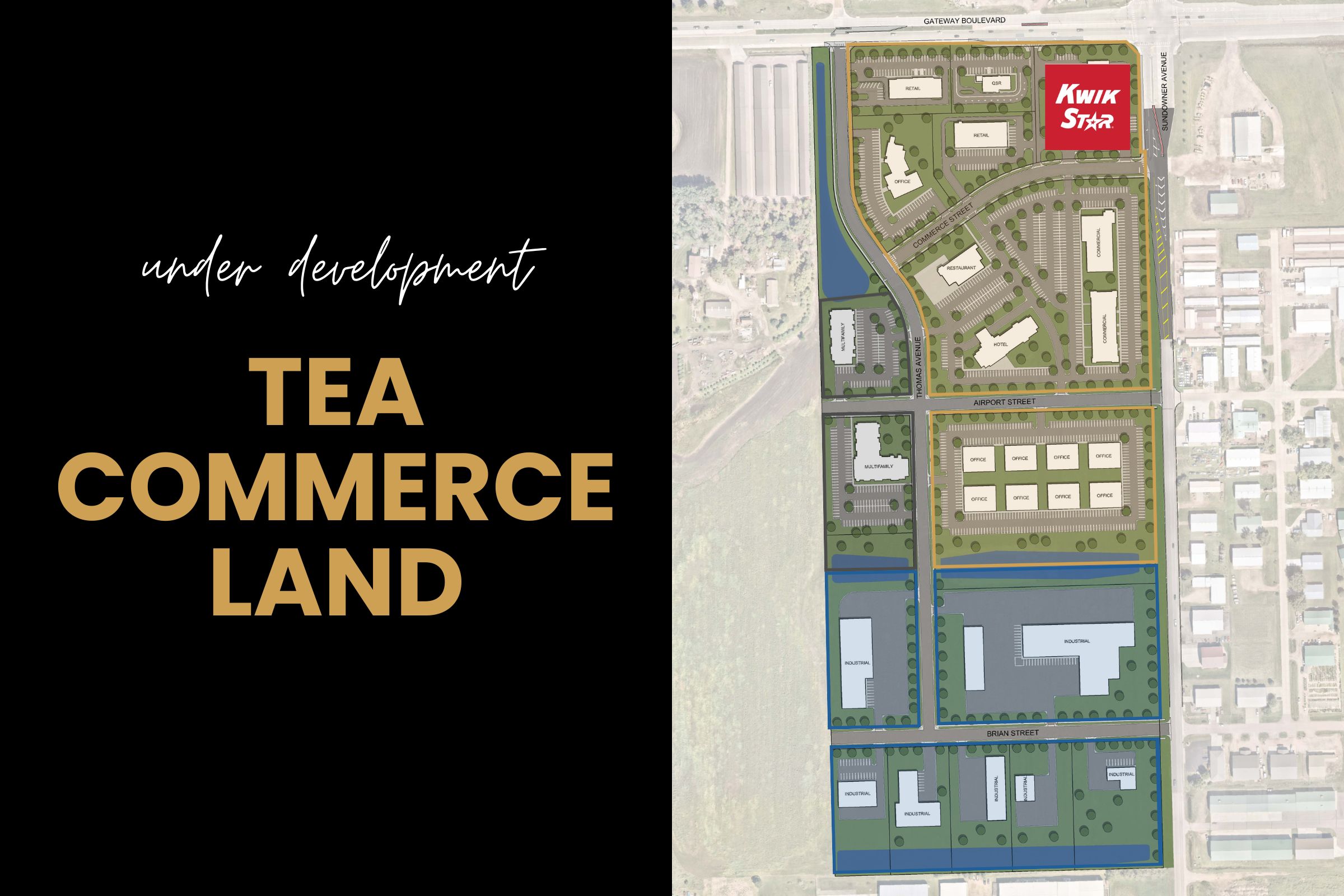
The Allura development at the intersection of Louise Avenue and 271st Street — at the Tea exit — is a visible product of that infrastructure investment. This project will mark the first time the Sioux Falls and Harrisburg city limits directly touch. It is a milestone in the metro’s evolution, and it represents what consistent infrastructure investment can unlock.
Sioux Falls West Side: 3,000 Acres Coming Online
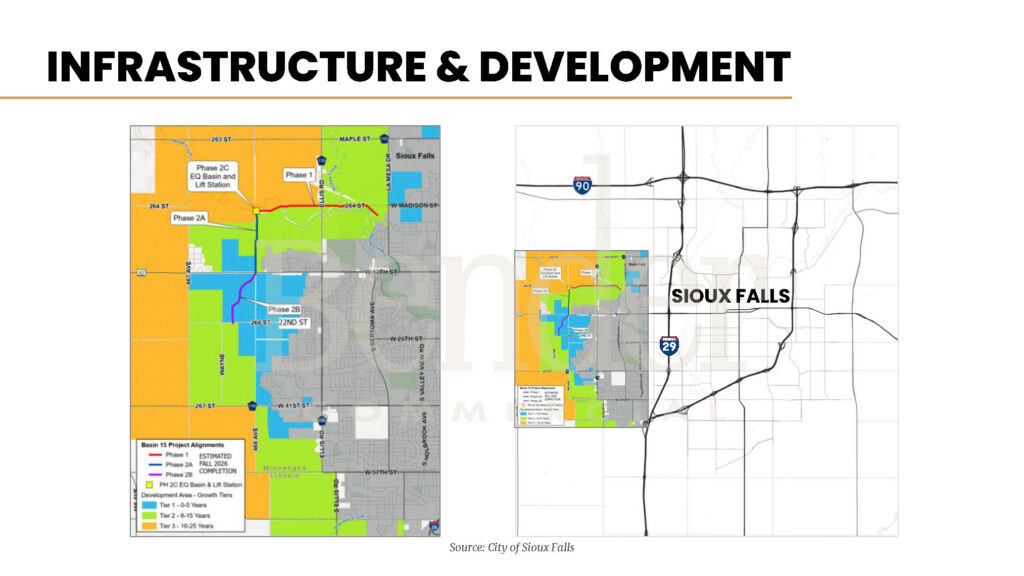
The city’s Basin 15 sewer extension on the west side — currently in phased construction with fall 2026 completion estimated — will open approximately 3,000 acres for development. The current absence of west-side transactions in 2025 is a direct reflection of this infrastructure not yet being in place.
Once complete, expect significant activity in that corridor. Land buyers who understand infrastructure timelines are already watching this area. Transactions typically precede vertical construction by 12 to 24 months, meaning the window to acquire ground near the infrastructure extension is relevant for buyers planning ahead.
2025 Sioux Falls Unimproved Land Transactions: Pricing Across the Metro
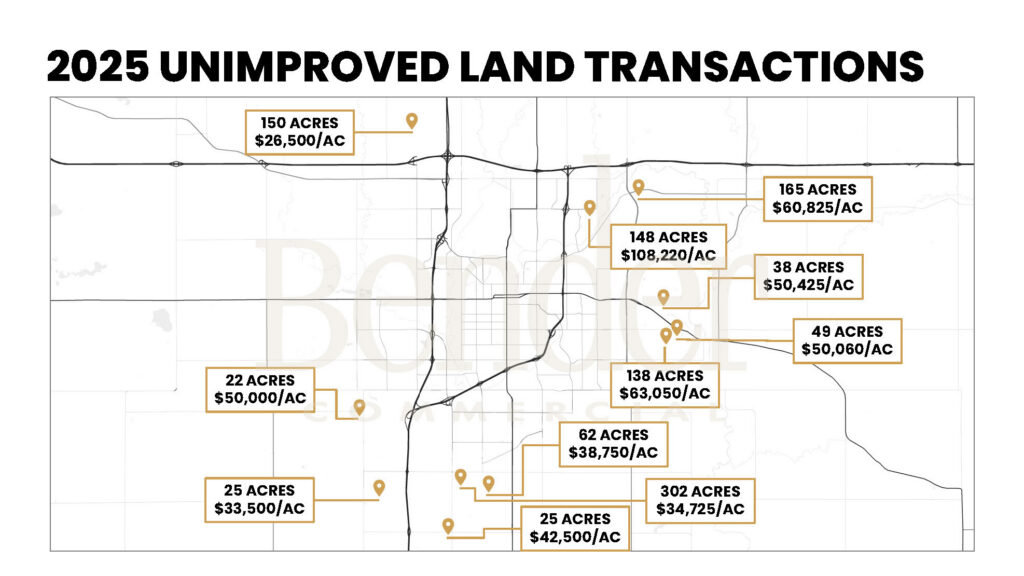
Across the 11 unimproved land transactions tracked by Bender Commercial in 2025, pricing ranged from $26,500 per acre on the north side to $108,220 per acre for the state prison site. Key transactions:
- Allura development (Harrisburg): 302 acres at approximately $34,725 per acre — the largest unimproved transaction by acreage in 2025 and a major milestone for the southern metro.
- Data center site (east Sioux Falls): 165 acres at approximately $60,825 per acre — the largest end-user-driven transaction of the year.
- East Sioux Falls corridor: Multiple transactions ranging from $38,750 to $63,050 per acre, reflecting the premium for infrastructure-served ground near the city core.
- North Sioux Falls: 150 acres at $26,500 per acre — the lowest per-acre price in the dataset, reflecting distance from core infrastructure.
The complete absence of west-side transactions is not a lack of interest — it reflects the sewer constraint described above. That will change when Basin 15 completes.
Improved Land: Five Consecutive Years of Steady Growth
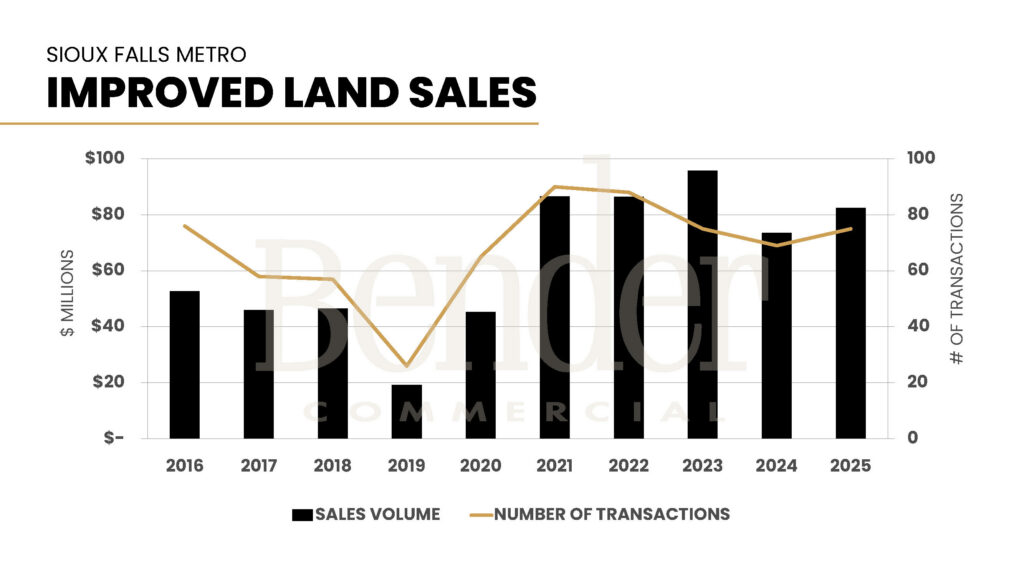
Improved land — build-ready sites where a developer has installed utilities, streets, curb and gutter, and completed platting — saw approximately $82 million in total volume across more than 75 transactions in 2025. That marks roughly five consecutive years of steady growth, reflecting consistent developer confidence in the market.
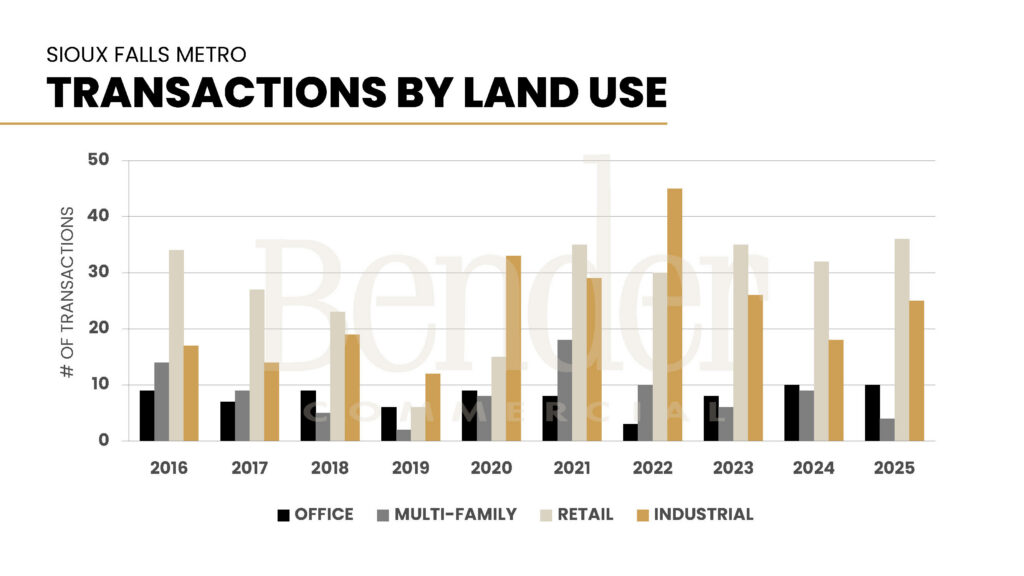
Breaking down improved land by use type:
- Retail: 36 transactions — the strongest performer. National brands are increasingly committing to metro communities beyond Sioux Falls, with active activity in Harrisburg, Tea, and Brandon.
- Office: 10 transactions — consistent with prior years and a positive signal given national office headwinds.
- Industrial: 25 transactions — solid, if not exceptional. Pricing has plateaued after several years of appreciation, likely reflecting a market finding equilibrium.
- Multi-Family: Only 4 transactions — the softest segment. Developers are focused on stabilizing existing projects before committing to new ground.
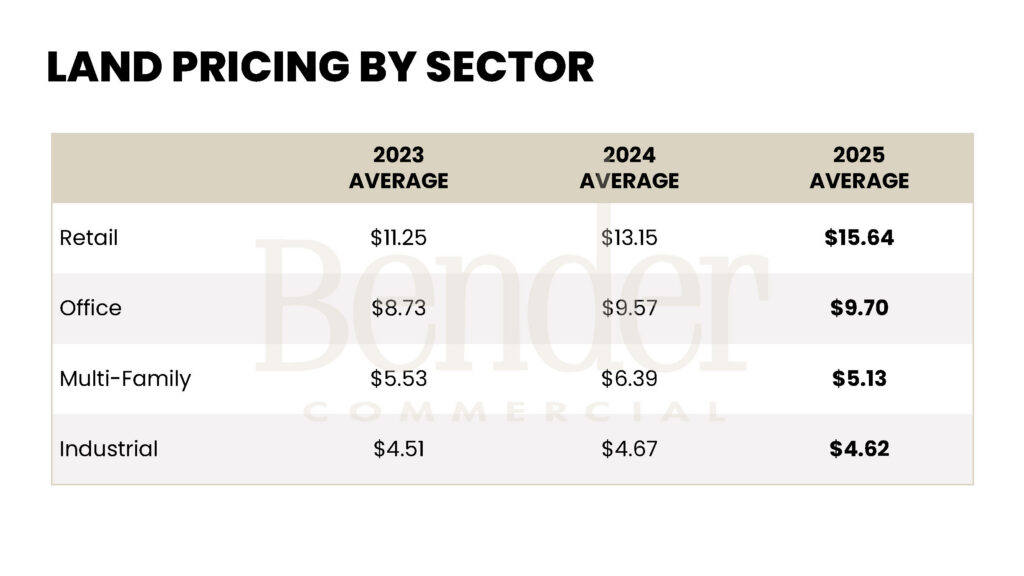
The three-year pricing trend confirms the pattern. Retail and office both showed upward movement, consistent with the health of those leasing markets. Multi-family hit its lowest average in three years at $5.13 per square foot, reflecting elevated vacancy. Industrial held near flat at $4.62 per square foot after years of appreciation.
Sioux Falls Land Market Outlook for 2026
The 2026 land market outlook calls for strategic, measured activity rather than peak volume. On the unimproved side, a meaningful inventory of developer-held ground exists across the metro. Developers are expected to work through that supply before aggressively pursuing new acquisitions — with unimproved land volume anticipated near 800 acres, modestly below 2025 levels. A rebound is expected for 2027 as inventory clears.
The more consequential story is infrastructure-driven. As Basin 15 completes on the west side and infrastructure continues to extend in Harrisburg and surrounding communities, new development corridors will open. Those investments are the real leading indicator for where land transactions will concentrate over the next three to five years.
For business owners and investors evaluating commercial property or site selection in the Sioux Falls market, understanding infrastructure timelines is as important as understanding asking prices. Bender Commercial has been tracking both for nearly three decades.
Ready to talk about what this means for your real estate decisions?
Bender Commercial has guided clients through three decades of Sioux Falls market cycles. Whether you’re evaluating an investment, planning a move, or simply trying to understand what the data means for your business, we’d welcome the conversation.